Nuclear energy ETF alternative to build your own nuclear stocks index and backtest it against NLR and URA
The biggest nuclear fund owns no company that runs a reactor. Pick the operators, small modular reactor developers, fuel suppliers and miners you actually want, set the weights, and see how the basket would have done next to the funds and the S&P 500. Then buy it at your own broker.
The backtest did not run just now. Tap Backtest it to try again.
Educational only · Never places a trade
In short
A nuclear energy ETF alternative is a basket of nuclear stocks you weight yourself instead of taking a fund's rule. It matters because "nuclear" funds own very different things. On their October 8, 2026 holdings files, Global X's URA, the largest at $5.5 billion, held no utilities and put 22.8% in Cameco, Sprott's URNM was 99.8% uranium miners and physical uranium, and Range's NUKZ was 80.4% reactor operators, reactor builders and equipment makers. Building your own nuclear stocks index means choosing that split, backtesting it, and buying the stocks at a broker with no expense ratio.
Summed from each fund's published holdings, October 8, 2026
How much of each nuclear ETF is uranium, and how much is reactors?
Every holding sorted into five groups. The dark part of each bar is uranium: miners plus trusts that hold the metal. The colored parts are the nuclear power business: enrichment and fuel, reactor builders, the utilities that run reactors, and the companies that build the plants. What is left is cash and unrelated miners.
Sprott URNJ
0% power
Junior miners only. NexGen, Paladin, Denison and Energy Fuels are 46.6%
Sprott URNM
0% power
Miners plus 20% in physical uranium vehicles
Global X URA
28.7% power
No utilities at all. Cameco alone is 22.8%
Themes URAN
45.7% power
Closest to an even split, but only $24 million in assets
VanEck NLR
53.4% power
Constellation and PSEG are 17.4% between them
Range NUKZ
80.4% power
Mostly utilities, builders and equipment makers
Start with URA, because it is the fund most people buy first. Its name says uranium and it means it: on October 8, half of the fund was mining companies and another 9.5% was trusts that hold uranium itself, led by the Sprott Physical Uranium Trust at 7.0%. Cameco alone was 22.8%. What it did not hold was a single utility. Constellation Energy, Vistra and Talen, the three US companies that sell the most nuclear electricity to data centers, were all at zero. If you bought URA because of the AI power story, you bought a bet on the uranium price instead.
NUKZ went the other way. Its index splits the money into four capped groups, so 39.1% sat in equipment and construction companies such as GE Vernova, Rolls-Royce, Doosan Enerbility and Hyundai Engineering, and another 30.8% in utilities. Uranium miners were 12.7%. The catch is the cap on diversified companies, 3% each, which is why Constellation was only 3.0% of a fund built around a nuclear revival. The utilities fund XLU held more of it, 7.3%.
NLR sits between them and is the one fund where the reactor operators lead: Constellation 9.2%, PSEG 8.2% and the Finnish utility Fortum 7.1%, next to Cameco at 8.2% and BWX Technologies, the US Navy's reactor maker, at 6.5%. None of these rules is wrong. They are six answers to what a nuclear investment should hold, and a basket of your own lets you give yours.
From each issuer's fund page and holdings file
Which nuclear ETF holds what, and how does each one pick its stocks?
| Fund | Expense ratio | Holdings | Rule | Largest positions (Oct 8) |
|---|---|---|---|---|
| VanEck Uranium and Nuclear (NLR) | 0.52% | 25 | MVIS Global Uranium & Nuclear Energy, size weighted with an 8% cap stepping down to 4.5% | Constellation 9.2%, Cameco 8.2%, PSEG 8.2%, Fortum 7.1%, BWX Technologies 6.5% |
| Global X Uranium (URA) | 0.69% | 60 | Solactive Global Uranium & Nuclear Components | Cameco 22.8%, Sprott Physical Uranium Trust 7.0%, NexGen 5.9%, Oklo 5.5%, Uranium Energy 4.7% |
| Sprott Uranium Miners (URNM) | 0.75% | 25 | VettaFi Global Uranium Mining, 82.5% miners and 17.5% physical uranium, 20% cap | Cameco 21.1%, Sprott Physical Uranium Trust 15.7%, NexGen 12.6%, CGN Mining 4.8%, Kazatomprom 4.7% |
| Sprott Junior Uranium Miners (URNJ) | 0.80% | 41 | Nasdaq Sprott Junior Uranium Miners, 12% cap | NexGen 13.5%, Paladin 11.5%, Denison 11.0%, Energy Fuels 10.6%, IsoEnergy 5.2% |
| Range Nuclear Renaissance (NUKZ) | 0.85% | 52 | VettaFi Nuclear Renaissance, four capped groups (reactors, utilities, construction, fuel) | Cameco 9.1%, Talen 3.5%, GE Vernova 3.4%, Vistra 3.2%, Oklo 3.2% |
| Themes Uranium & Nuclear (URAN) | 0.35% | 49 | BITA Global Uranium and Nuclear Select | Constellation 8.9%, Cameco 8.5%, Kazatomprom 4.2%, AEP 3.6%, Duke 3.6% |
Size matters for trading costs. URA ($5.5 billion), NLR ($3.5 billion) and URNM ($1.8 billion) are large and trade with tight spreads. NUKZ held $676 million and URNJ $308 million. URAN, the cheapest fund at 0.35%, had $24 million, small enough that its published median spread of about 0.8% can cost more on one round trip than three years of the fee gap.
Overlap is higher among the uranium funds than among the nuclear ones. URA and URNM share 25 companies and 57.5% of their money, so owning both is mostly owning Cameco twice. NLR and URA overlap 51.3%. NUKZ is the odd one out: it shares only 29.1% with NLR and 26.6% with URA. The full fee ranking, the cheapest fund per dollar of reactor or uranium exposure and the Vanguard question are in our guide to the best nuclear energy ETF.
// The universe, five groups
Which stocks belong in a nuclear stocks index?
US-listed nuclear companies sell five different things. The share you give each group decides whether your index rides on the uranium price, on reactor orders, on licensing news for new designs or on long power contracts with data centers.
1
Uranium miners and physical uranium
2
Fuel and enrichment
3
Reactor builders and small modular reactors
4
Reactor operators
5
Equipment and services
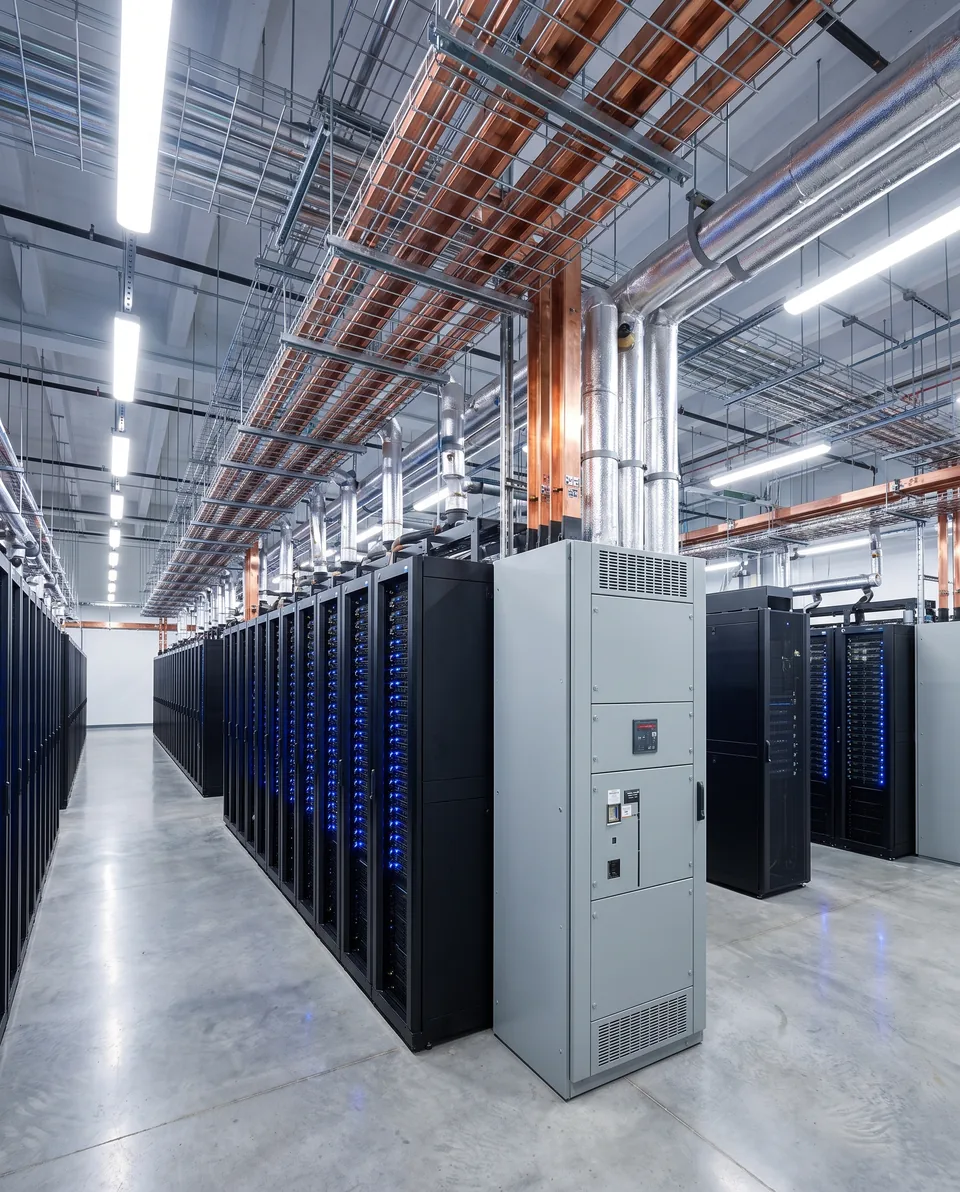
The reactor operators are where the data center money lands. Constellation signed a 20 year agreement with Microsoft in 2024 to restart the Three Mile Island Unit 1 reactor, now called the Crane Clean Energy Center, and a 20 year agreement with Meta in 2025 for the output of its Clinton plant in Illinois. Talen agreed in June 2025 to supply Amazon with up to 1,920 megawatts from its Susquehanna plant through 2042. Those contracts are what make these companies behave like long-dated power sellers rather than ordinary utilities.
The reactor builders are the opposite: Oklo and NANO Nuclear have no operating reactors yet, and their prices move on licensing and financing news. Miners swing with the uranium spot price. A useful way to build the index is to set the share for each group first, then the stocks inside it. Weighting is the second decision. By size, Constellation, GE Vernova and Cameco dominate, so most people cap them or use an equal weight index for the rest. The same power demand runs through our AI infrastructure stocks index, where the utilities sit next to the chip and cooling companies.
From a view on nuclear power to a basket you can buy
How to build your own nuclear stocks index in four steps
1
Pick uranium or power
Decide how much of the bet is the uranium price and how much is reactors that sell electricity. That one choice separates URNM from NUKZ.
2
Fill the five groups
Search the catalog of US-listed stocks, add 12 to 25 names across miners, fuel, builders, operators and equipment, and set equal, size or your own weights.
3
Backtest against the funds
Run it against the S&P 500, and build a one-line index of NLR or URA to put a fund with more than fifteen years of history on the same chart.
4
Track it, then buy it
Follow the index daily against its benchmark, export the weights, and place the basket at your own broker when you are ready.
Nuclear has a long and rough history to test against. NLR dates from 2007 and URA from 2010, so a basket can be run through the 2011 Fukushima accident, the uranium bear market that followed and the 2020s recovery. Many of the newer names cannot: Oklo, NANO Nuclear and Talen in its current form have only a few years of prices, which makes a long backtest of a reactor builder basket impossible. Test the operators and miners over the long window and the young names over the short one. Look at the maximum drawdown next to the S&P 500 before the return. Backtests are hypothetical and past returns do not predict future ones. If you cap a name, test a quarterly reset with the custom index rebalancing tool. URA shows why: Cameco sat at 22.8%, above the 18% top-name limit in the 2024 version of its index rules, between reviews.
Three ways to own nuclear stocks, compared honestly
Build your own nuclear index vs a nuclear ETF vs a basket broker
| Nuclear or uranium ETF | Fidelity Basket Portfolios | Indexes, then your broker | |
|---|---|---|---|
| Who decides the uranium and reactor split | The fund's index | You | You, and you can test it first |
| Yearly cost | 0.35% to 0.85% of the balance | $4.99 a month flat | From $24 a month for the software, billed yearly, plus your broker's cost |
| History you can test | Since 2007 for NLR and 2010 for URA, one to six years for the rest | None | As far back as your youngest stock goes |
| Foreign miners and physical uranium | Kazatomprom, Paladin and the uranium trusts are held | US-listed shares only | US-listed shares and ADRs |
| Per-stock tax losses | No | Yes, done by you | Yes, at your broker |
| Where it falls short | You take the fund's answer on Cameco and Constellation | No way to test a design before buying | You place and rebalance the trades, and miss the foreign-only miners |
The ETF wins when you want one ticker and no upkeep, and when you want things a US brokerage account cannot easily hold: Kazatomprom trades in London and Astana, Paladin and the junior Australian miners trade in Sydney, and Yellow Cake trades in London. If uranium itself is the bet, URNM at 0.75% is the honest product. Building your own pays off on cost once the balance is large enough that a flat $288 a year for the software beats the fund fee, about $55,000 against NLR and $42,000 against URA, and whenever the mix you want is one no fund offers, such as the reactor operators and builders with no miners at all.
Owning the shares has a tax side too. Nuclear stocks do not move together: the reactor developers can halve in a quarter on a licensing delay while the operators hold steady on their power contracts. When one name in your basket falls, it can be sold for a tax loss while the rest stays in place, which a fund does not allow. Check the dates with the wash sale calculator before you buy the same stock back.
What Indexes does and does not do: it is index construction, backtesting and tracking software. It does not hold money, place trades or give investment advice. You design and test the nuclear stocks index here and hold it wherever you already invest.
Nuclear ETF questions
What people ask before they buy nuclear stocks
What is the best nuclear energy ETF?
It depends on whether you want uranium or nuclear power. For reactor operators and builders, VanEck's NLR (0.52%) held the most, 53.4% in utilities and reactor companies on October 8, 2026, led by Constellation at 9.2%. For uranium itself, Sprott's URNM (0.75%) is 99.8% miners and physical uranium. Global X's URA, the largest fund, holds no utilities at all.
Does Vanguard have a nuclear energy ETF?
No. Vanguard has no nuclear or uranium fund. Its nearest is the Vanguard Utilities ETF (VPU, 0.09%), where Constellation, Vistra, Talen and PSEG were 12.4% of the fund on August 31, 2026, next to regulated utilities such as NextEra and Southern. It holds no uranium miners. To own nuclear stocks through Vanguard you would buy the shares in a Vanguard brokerage account.
Which nuclear ETF has the lowest expense ratio?
Themes' URAN charges 0.35%, then NLR at 0.52% and URA at 0.69%. URNM charges 0.75%, URNJ 0.80% and NUKZ 0.85%. URAN is small, about $24 million in assets with a median bid and ask spread near 0.8%, so a round trip can cost more than the fee saving. Among the large funds, NLR is the cheapest.
What is the difference between a uranium ETF and a nuclear energy ETF?
A uranium ETF owns the companies that dig and hold the fuel, so it moves with the uranium price. A nuclear energy ETF also owns the companies that run reactors and build them. On October 8, 2026, URNM was 99.8% miners and physical uranium, while NUKZ was 12.7% uranium and 80.4% utilities, reactor builders and equipment makers.
Which nuclear ETF holds the most Constellation Energy?
NLR held the most Constellation Energy, 9.2% on October 8, 2026, and URAN 8.9%. NUKZ held 3.0% because its index caps diversified companies at 3%. URA and URNM held none. The utilities fund XLU held 7.3%, more than NUKZ, and in the S&P 500 fund SPY Constellation was 0.14%.
Is Oklo in a nuclear ETF?
Yes. Oklo was 5.5% of URA, 4.8% of NLR, 3.2% of NUKZ and 2.6% of URAN on October 8, 2026, and 0.36% of Vanguard's VPU on August 31. The pure uranium miner funds URNM and URNJ do not hold it. Oklo is not in the S&P 500.
Can I build my own nuclear ETF?
You can build the same exposure without a fund. Pick the reactor operators, small modular reactor developers, fuel companies and miners you want, set the weights, backtest the basket against NLR, URA and the S&P 500, then buy the shares at your broker, where there is no expense ratio and each stock carries its own tax lot.
Sources
Holdings, fees and assets from each issuer's fund page and daily holdings file for the October 8, 2026 close: vaneck.com (NLR), globalxetfs.com (URA), sprottetfs.com (URNM and URNJ), rangeetfs.com (NUKZ), themesetfs.com (URAN, file dated October 9) and ssga.com (XLU and SPY). Vanguard Utilities holdings from Vanguard's file for August 31, 2026. Index rules from the published methodology documents of MarketVector, Solactive, VettaFi, Nasdaq and BITA; the URAN weighting summary is from a secondary source. The five groups are our own classification of each holding by its main business; a few companies, such as KEPCO Engineering and Lockheed Martin in NUKZ, could reasonably sit in another group, and BHP, Sibanye Stillwater and Itochu in URA were left out of the uranium share. Power purchase agreements from Constellation and Talen announcements as reported in 2024 and 2025. Holdings and fees change, so confirm them on the fund page before you buy. Indexes is not affiliated with any fund issuer or broker named here. We make index construction and backtesting software: we do not manage money, place trades or give investment advice, and backtested results are hypothetical.
Build the nuclear index you actually meant to buy
Choose the operators, builders and miners and the weights, backtest the basket against NLR, URA and the S&P 500, and track it every day. Then buy it wherever you invest.
Keep reading