Vanguard Data Center ETF Alternatives Ranked by Fee
Vanguard has no data center ETF. VNQ costs 0.13%, IDGT 0.37%, SRVR 0.49%, DTCR and RACK 0.50%, and three of them hold 20% to 28% in cell towers. What each fee buys.
September 2026 · Indexes
The backtest did not run just now. Tap Backtest it to try again.
Educational only · Never places a trade
Vanguard does not offer a data center ETF, or an AI infrastructure ETF. The closest Vanguard fund is the Vanguard Real Estate ETF (VNQ) at 0.13%, where Equinix, Digital Realty and Iron Mountain added up to about 10.5% of the fund in its July 2026 filing. The dedicated data center ETFs cost roughly three to four times as much: iShares IDGT charges 0.37%, Pacer SRVR 0.49%, and Global X DTCR and VanEck RACK 0.50%. Three of those four also hold a large slice of cell tower companies, which are not data centers.
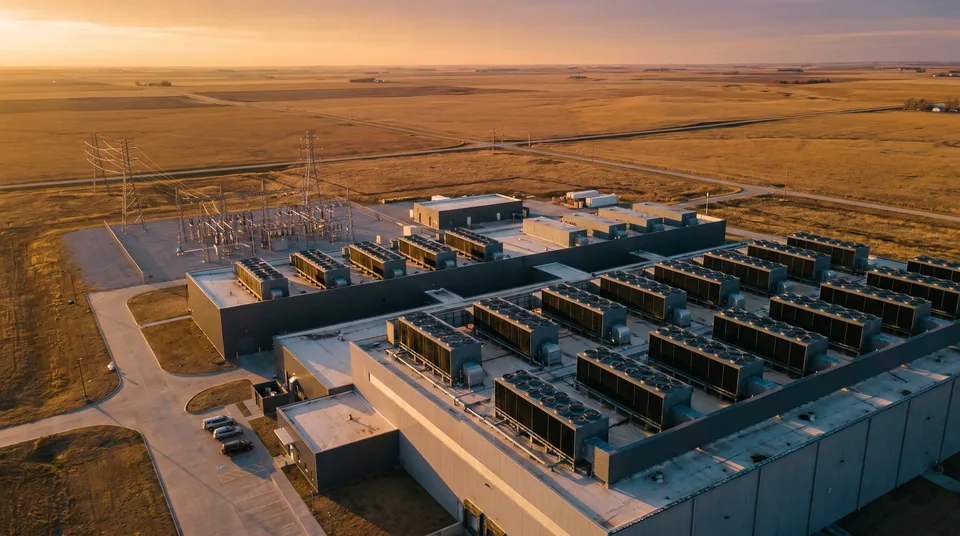
People search for a Vanguard data center ETF because they want the obvious thing: cheap, plain exposure to the buildings AI runs in, from a fund family they already trust. Vanguard's own brokerage site answers the question indirectly. It lists Global X's DTCR as a third-party ETF you can buy there, because it has nothing of its own. So the real choice is between a cheap Vanguard fund that holds data centers as a minor part of something broader, a specialist fund that costs more and holds things you may not expect, or a basket you put together yourself.
Every fee, holding and weighting rule below comes from the issuer's fund page, its holdings file or its SEC filings, read on September 28 and 29, 2026. We make index construction and backtesting software; we do not sell funds or give investment advice.
Vanguard data center ETF alternatives ranked by fee
| Rank | Fund | Expense ratio | Cost on $10,000 | Cost on $50,000 | What it mainly holds |
|---|---|---|---|---|---|
| 1 | Vanguard Information Technology (VGT) | 0.09% | $9 | $45 | Tech stocks, chips and hardware included, no REITs |
| 1 | Vanguard Utilities (VPU) | 0.09% | $9 | $45 | US utilities, the companies that sell data centers their power |
| 3 | Vanguard Real Estate (VNQ) | 0.13% | $13 | $65 | All US REITs; data center REITs about 10.5%, tower REITs about 6.9% |
| 4 | iShares U.S. Digital Infrastructure and Real Estate (IDGT) | 0.37% | $37 | $185 | Communications equipment 27.2%, tower REITs 20.1%, data center REITs 18.5% |
| 5 | Pacer Data & Infrastructure Real Estate (SRVR) | 0.49% | $49 | $245 | 80% data center, tower and digital real estate, 20% nuclear and power |
| 6 | Global X Data Center & Digital Infrastructure (DTCR) | 0.50% | $50 | $250 | About 60% real estate, including 24% in the three US tower owners |
| 6 | VanEck Data Center Supply Chain (RACK) | 0.50% | $50 | $250 | Chips, networking, power equipment; REITs about 3% |
The three Vanguard funds are not data center funds, and nobody should buy VPU thinking it is one. They are on the list because they are the cheapest way to own each layer a data center fund mixes together: the landlords sit in VNQ, the power sits in VPU, and the chips and servers sit in VGT. The four specialist funds are what you get if you want the mix done for you.
Is there a Vanguard data center ETF?
No. As of September 2026 Vanguard has no ETF or mutual fund dedicated to data centers, digital infrastructure or AI infrastructure, and its brokerage lists DTCR as an outside fund. The nearest Vanguard product is VNQ, a broad real estate index fund, which holds Equinix (5.23%), Digital Realty (3.37%) and Iron Mountain (1.89%) among its REITs.
Those weights come from VNQ's Form N-PORT for July 31, 2026, which covers all share classes of Vanguard Real Estate Index Fund. The same filing shows American Tower at 4.20%, Crown Castle at 1.73% and SBA Communications at 1.00%. The fund also holds 14.5% in another Vanguard real estate fund that is not broken out here, so the true totals are slightly higher. Either way, VNQ is a real estate fund in which data centers are one theme among many, next to warehouses, apartments, hospitals and self-storage.
What is the best data center ETF?
For pure data center landlords at the lowest fee, none of them is clean. DTCR (0.50%, $2.04 billion) is the largest and has the most data center weight, with Digital Realty and Equinix at about 12% each. SRVR (0.49%) holds Equinix and Digital Realty at about 15% each but puts 20% into nuclear and power stocks. IDGT (0.37%) is the cheapest specialist and the least focused.
The difference comes down to one line in each index rulebook. DTCR's index caps data center and cell tower owners at 12% each, hardware companies at 2% and everything else at 4.5%. SRVR's index now splits 80% to data center and infrastructure real estate and 20% to power generation companies such as small modular reactor developers, with a 15% cap per stock. IDGT's index sets minimum weights for tower companies and for data center companies, then lets communications equipment, storage and communications chips take up to 45%. RACK, launched in June 2026, is a supply chain fund: its top five on September 18 were Eaton, NVIDIA, Micron, Broadcom and Amphenol.
| Fund | Data center REITs in top holdings | Cell tower REITs | Assets | Holdings |
|---|---|---|---|---|
| DTCR | Digital Realty 12.4%, Equinix 12.2% | American Tower 12.3%, Crown Castle 7.8%, SBA 4.1% (24.2%) | $2.04B | 25 |
| SRVR | Equinix 15.5%, Digital Realty 15.0%, Iron Mountain 4.6% | American Tower 15.0%, Crown Castle 4.2%, SBA 4.2%, Cellnex 4.3% (27.7%) | $323M | 66 |
| IDGT | Data center REITs 18.5% in total | Tower REITs 20.1% in total | $520M | 25 |
| RACK | Equinix 1.4%, Digital Realty 1.0%, Iron Mountain 0.9% | None in the top holdings | $69M | 52 |
Why do data center ETFs hold cell tower stocks?
Because most of them started as "digital infrastructure" or "data and infrastructure real estate" funds, a category that has always included cell towers. DTCR was called the Global X Data Center REITs & Digital Infrastructure ETF, ticker VPN, until April 2024. The rename to "Data Center" did not remove the towers: American Tower is still its second largest holding.
That matters if AI demand is the reason you are buying. A tower company rents antenna space to wireless carriers. Its revenue depends on 5G spending and carrier contracts, not on how many GPUs a cloud company installs this year. If a quarter of your "data center" fund is towers, a quarter of your AI thesis is sitting in a different business. You can check this yourself by building a one-line index of DTCR and a second index of just Equinix and Digital Realty, then comparing them against the S&P 500 in the same chart. The gap between the two lines is roughly what the towers and the other holdings did to the result.
Is it cheaper to build your own data center basket than to buy an ETF?
Above about $12,000, yes, compared with a 0.50% fund. Fidelity Basket Portfolios charges a flat $4.99 a month, $59.88 a year, to hold up to 50 stocks or ETFs from $1 per position, with no expense ratio. That flat fee beats DTCR, SRVR and RACK once the balance passes about $12,000, and IDGT once it passes about $16,200. Below those amounts the ETF is cheaper.
Cost is half of it. The other half is that you choose the mix. A basket of Equinix, Digital Realty, Iron Mountain and a few data center operators gives you the landlords with no towers. Add Eaton, Vertiv and Quanta Services and you have the equipment and construction side as well. Add a utility or two and you have the power. That is exactly the choice the AI infrastructure stocks index builder is designed for: set the weight for each layer, fill it with names, and backtest the basket against the funds before you commit money.
There is a tax difference as well. REIT dividends are mostly not qualified dividends, so they are taxed at ordinary income rates, although the REIT portion may qualify for the 20% qualified business income deduction. Your broker reports it in box 5 of Form 1099-DIV as section 199A dividends. If you hold data center REITs in a taxable account, that box is worth checking when you file your return with the 1099-DIV forms from each broker. Holding the stocks directly also gives each position its own cost basis, so a REIT that falls can be sold for a loss while the rest of the basket stays; the wash sale calculator shows how long to wait before buying it back.
Which data center ETF alternative fits which investor?
| If you want | Consider | Why |
|---|---|---|
| The lowest fee and data centers as a small part of real estate | VNQ, 0.13% | About 10.5% in data center REITs, from a fund family you may already use |
| The biggest dedicated data center fund | DTCR, 0.50% | $2.04 billion, Equinix and Digital Realty at about 12% each, but 24% towers |
| Data centers plus a nuclear and power tilt | SRVR, 0.49% | 80% real estate, 20% power generation by rule |
| The cheapest specialist fund | IDGT, 0.37% | Towers, data centers and communications equipment in set proportions |
| The equipment and chip side, not the buildings | RACK, 0.50% | About 3% REITs; Eaton, NVIDIA and Micron lead |
| Your own mix of landlords, equipment and power | A basket you design and test | No expense ratio at a basket broker, and no towers unless you add them |
If the data center building is only one part of your view, the wider theme is covered in our comparison of AI infrastructure ETFs by layer, which shows what AIPO, TCAI, ZAP and GRID hold, and the chip layer has its own ranking in the cheapest semiconductor ETF comparison. For the general case of a themed fund against a basket you build, see thematic ETFs vs building your own basket.
How to choose
Start with what you actually want to own. If it is the buildings, look at the tower share first and the fee second, because a 0.13% difference in fee is small next to a 24% difference in what the fund holds. If it is the whole AI build-out, a data center REIT fund is the wrong tool on its own, because most of the money being spent goes to equipment, power and construction, not to landlords. And if no fund's mix matches your view, build the basket, backtest it against DTCR and the S&P 500, and buy it at your own broker. Expense ratios and holdings change, so confirm them on the fund page before you buy.
Build your index and see how it backtests
Bundle stocks or crypto into your own weighted index, backtest it against real market history, and track it against the S&P 500 or BTC. Educational and informational only, and Indexes never places a trade.